Design process · Prototyping II

From science
research to a
product concept.

Every decision in Stride traces back to a specific finding from Andrew Huberman's research on dopamine, motivation, and how the brain actually pursues goals. This documents that chain — from raw notes to user flow.

Source Huberman Lab, Ep. 55 & 107
Subject Goal pursuit neuroscience
Output Mobile goal management app
Scroll to explore
01

The starting point

Phase I work — before the research phase

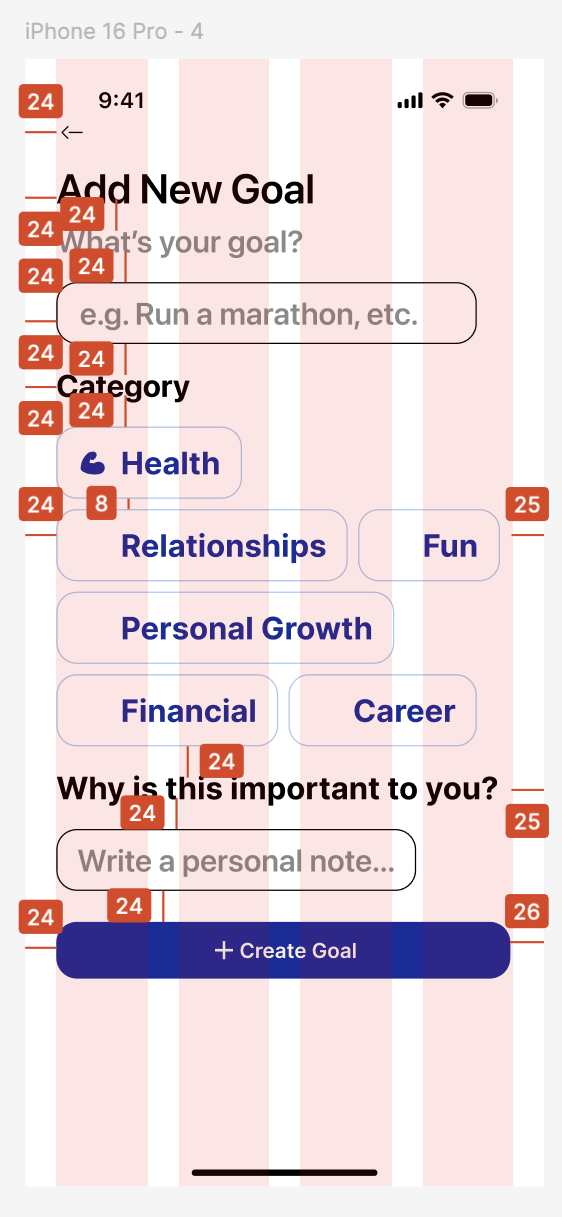
Phase I was about learning the craft — applying visual design rules, building components, exploring layouts. The screens existed but without a concept behind them. The jump to Phase II meant asking a harder question: what problem does this actually solve, and why does it work?
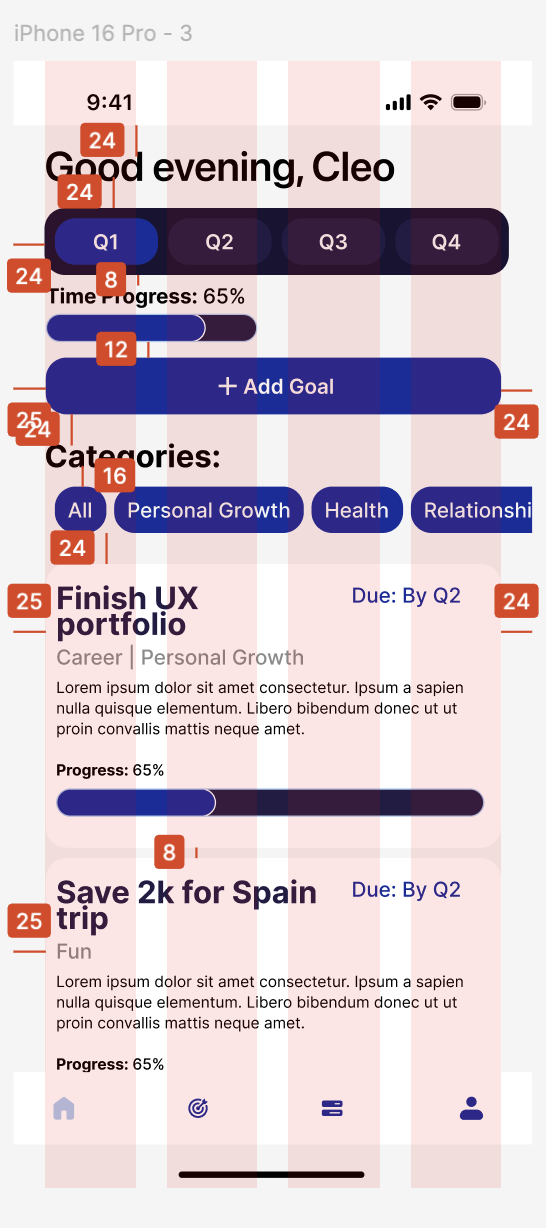
Phase I — goal dashboard wireframe
Goal dashboard — Phase I
Phase I — add new goal screen
Add new goal — Phase I
Visual direction

Moodboard

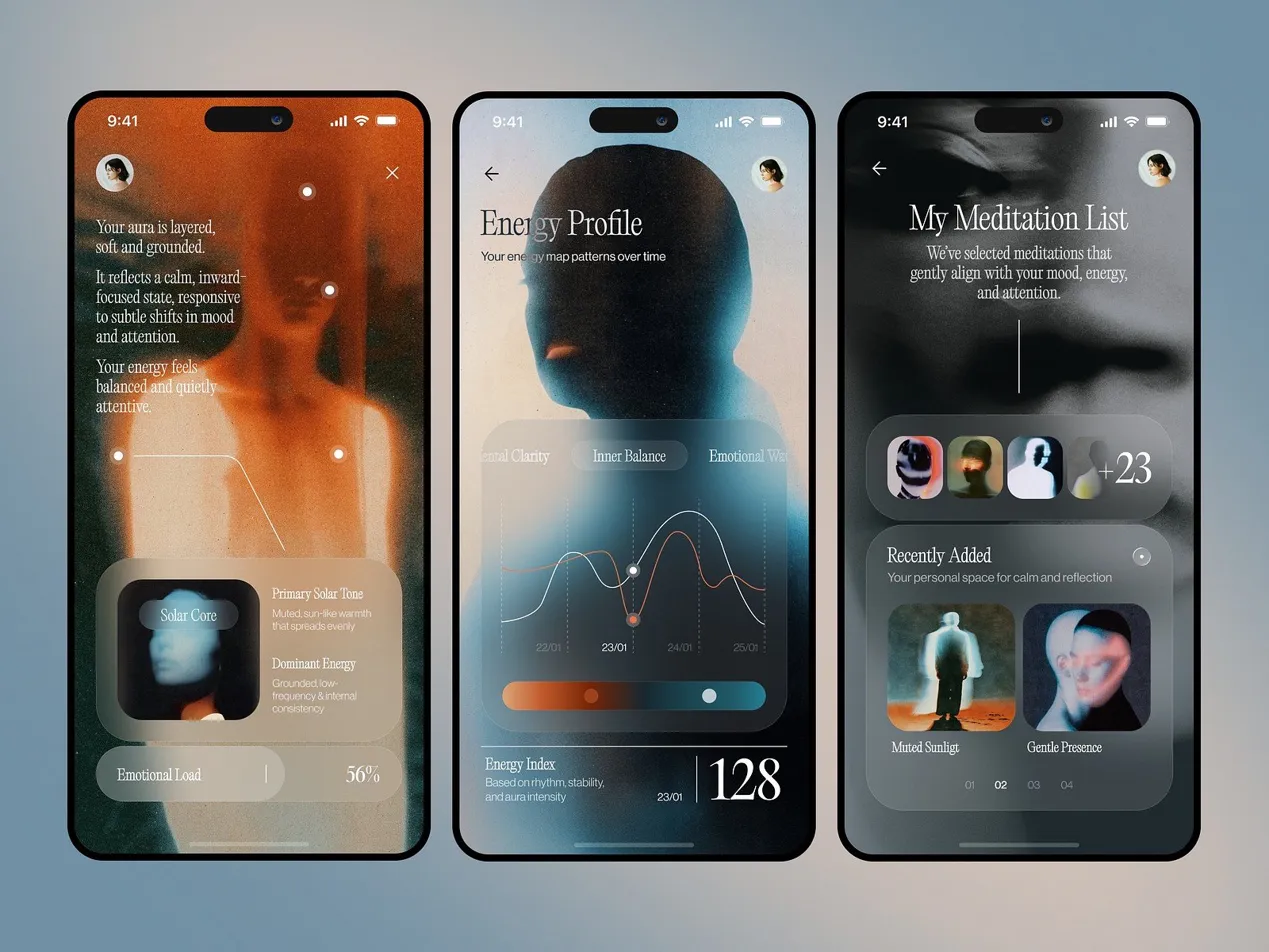
Reference imagery that shaped the visual language — dark interfaces, editorial typography, glass materiality, and refined interaction details.
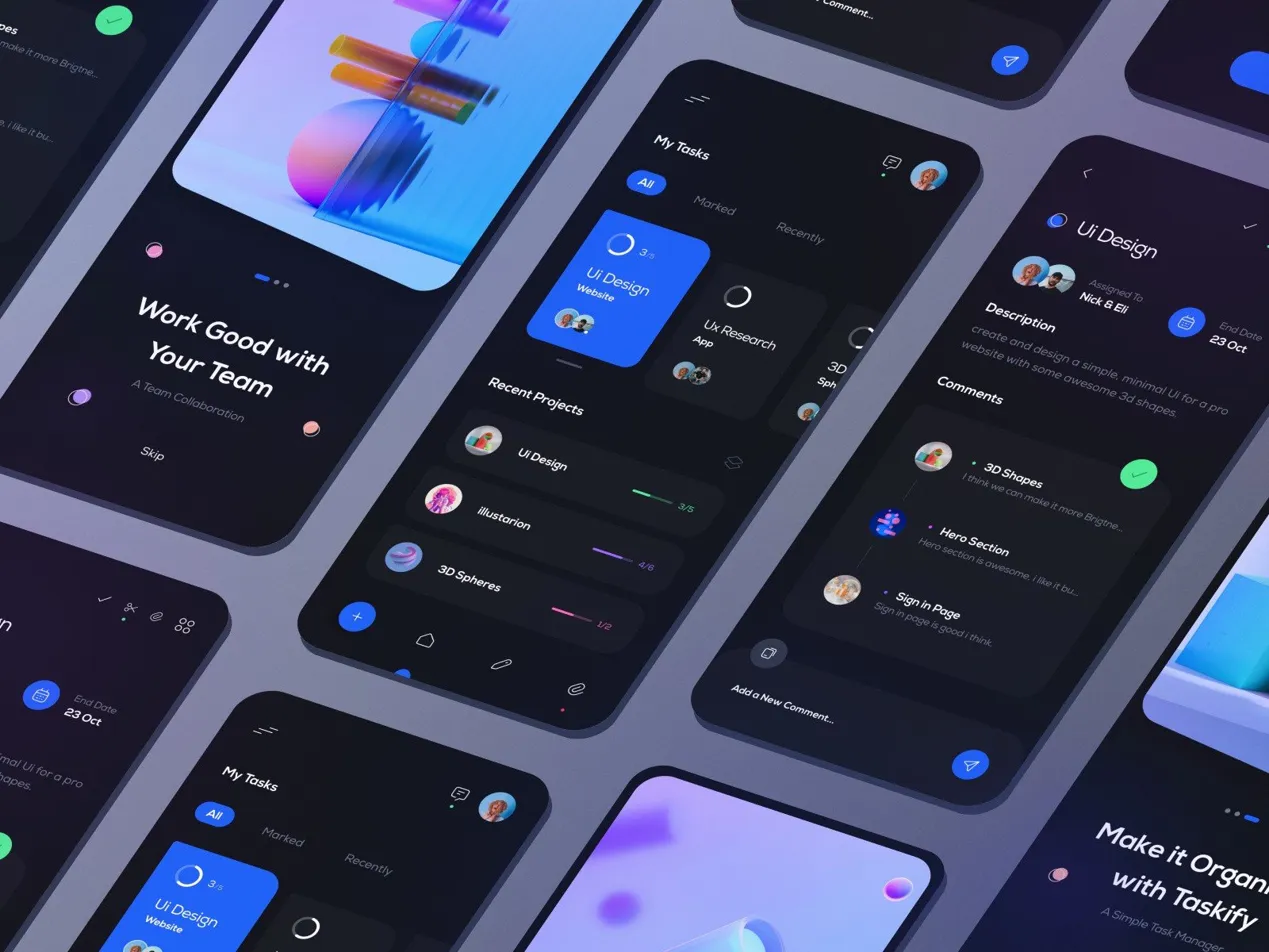
Dark task management UI reference
Dark UI system · task interface reference
Editorial energy profile app reference
Editorial data UI · atmospheric typography
Blue glass material reference
Material language · electric blue, glass
Pill button interaction reference
Interaction detail · frosted pill CTA

Most productivity apps are to-do lists. They track whether you did something — not why you stopped. The research question: what does the science say about why people abandon goals midway, and can that be designed around?

02

What the research says

Key findings from Huberman Lab — the raw source material

The primary source was Huberman Lab's episode on the neuroscience of goal setting. These are the actual findings — not paraphrased for design, but the science as recorded. Each one raised a direct design question.

F — 01
"Dopamine is not the molecule of pleasure — it's the molecule of motivation. It governs the pursuit of goals, not the achievement of them."
Dopamine releases most when something positive and unexpected happens. When we predict a reward and it doesn't arrive, dopamine drops below baseline. The system is wired for pursuit — not arrival.
Design question raised If dopamine is about the chase, why do all apps put the reward at completion? What would an app look like if it rewarded effort sessions instead of task checkboxes?
F — 02
"Visualising failure is the optimal strategy for maintaining a goal. Thinking about how bad it will be if you don't do it nearly doubles the probability of reaching the goal."
Positive visualisation is useful at the start — it initiates pursuit. But it becomes a poor motivator over time. The brain moves away from fear faster than toward desire. Specificity matters: the more concretely you articulate what failure looks and feels like, the stronger the effect.
Design question raised When should an app surface negative motivation? Can you prompt users to write their "cost of inaction" at onboarding and resurface it strategically — without the experience feeling punishing?
F — 03
"Pick an interval to assess progress. If you've been making progress, reward yourself at that interval. The reward is entirely mental — saying 'yes, I'm on the right track' provides a dopamine hit."
Weekly is the recommended cadence. Self-assessment doesn't need to be complex — but it must be consistent. Skipping the interval breaks the neurochemical refuelling mechanism entirely.
Design question raised How do you make a weekly check-in feel essential rather than optional? What structure makes reflection fast enough to actually happen, but substantive enough to generate the dopamine signal?
F — 04
"Receiving rewards consistently diminishes their power. Intermittent, unpredictable rewards — roughly 50% of the time — sustain dopamine baseline better than rewarding every completion."
Predictable rewards train the brain to expect them. When they don't arrive, motivation drops. The recommendation is to reward effort on a coin-flip basis — not after every session, and not never.
Design question raised Can an app deliberately withhold acknowledgment on some sessions? Does it read as broken, or can it be designed to feel intentional to a user who doesn't know the science behind it?
F — 05
"When goals are moderately hard — just outside immediate ability — there is a near-doubling in the likelihood of pursuing them. Too easy or too hard both reduce follow-through to near zero."
The optimal failure rate for sustained engagement is approximately 15%. An 85% success rate keeps the nervous system engaged. Goals that feel impossible trigger defeat before starting.
Design question raised How do you get users to be honest about goal difficulty at setup — before they've committed and have incentive to inflate their ambition? And how do you surface a recalibration prompt if they're getting it wrong?
F — 06
"Goals need extremely specific action steps — and those steps must be updated weekly based on performance. The concrete plan is the mechanism, not a formality."
Vague goals fail because the nervous system can't act on them. Specificity of action steps and frequency of updating them are the two variables most correlated with goal completion. Setting once and ignoring is worse than useless.
Design question raised How do you make updating action steps feel like a natural part of the weekly loop — not a separate administrative task users skip?
F — 07
"Pursuing too many goals at once dilutes the neurochemical resources available for any one of them. Limit active goals to one to three major pursuits."
Multitasking during goal pursuit reduces the adrenaline and dopamine available for focused effort. A single target the nervous system can point at completely is the optimal structure. Breadth is the enemy of progress.
Design question raised Should the app enforce this as a hard limit? How do you frame a one-goal constraint to a user accustomed to juggling everything — as a limitation or as the feature itself?
03

From findings to decisions

How each research finding shaped a specific feature

A competitive analysis of Streaks, Habitica, Notion, and Finch confirmed that no existing app addresses more than two of these mechanisms. That gap defined the feature set.

Finding The problem it revealed The feature decision
Dopamine = motivation, not reward
Apps reward completion — but completion is the end of motivation, not its source.
Log effort sessions, not tasks. Primary tracking unit: did you show up and work.
Failure foreshadowing doubles attainment
No app prompts negative motivation. All default to encouragement, which loses power over 12 weeks.
Onboarding step 3: "What happens if you don't?" — written by user, surfaced back every Sunday.
Weekly self-assessment = dopamine refuel
Check-ins in existing apps are optional, generic, and consequence-free to skip.
Sunday review is a core loop requirement. Skipping breaks the visible week streak — a meaningful loss.
Intermittent > consistent reward
Every app acknowledges every action. This trains expectation, and expectation kills dopamine spikes.
~50% of effort saves trigger acknowledgment. The rest return silently. The mechanism, not a bug.
Moderate difficulty doubles follow-through
Users set goals with no challenge calibration. Easy disengages; impossible creates instant defeat.
Onboarding step 4: difficulty slider 1–10, live feedback below 5 or above 8 triggers recalibration.
Action steps must update weekly
Goal apps collect the goal title and leave you alone. No structured mechanism to revise the plan.
Sunday review ends with mandatory "action steps for next week" — pre-filled to reduce friction.
One goal = full neurochemical focus
All productivity apps support unlimited goals. The opposite of what the science recommends.
Hard system limit: one active goal per quarter. Framed as the feature, not a restriction.
04

The user flows

Two flows that define the full system

The research condensed into two flows: a one-time onboarding that sets up the neurochemical frame, and a weekly loop that runs for 12 weeks. Every step in both flows is traceable to a finding above.

Flow 01

Onboarding — happens once

6 steps, ~5 minutes. Builds the motivational frame before the user logs a single session.

Name your goal
One goal only — enforced at the system level, not suggested.
F-07 → one goal = full neurochemical focus
Why it matters to you
Intrinsic motivation prompt — your real reason, not the surface goal.
Research note → subjective understanding of "why" is fundamental to attainment
Cost of inaction
Write out what happens if you don't achieve this. Specific, personal, honest.
F-02 → failure foreshadowing nearly doubles attainment
Difficulty calibration
Slider 1–10. Live feedback fires if score is outside the optimal 6–8 range.
F-05 → moderate difficulty doubles follow-through; 85% success rate is optimal
Set milestones
3–4 sub-goals across the quarter. Concrete checkpoints, not vague stages.
F-06 → concrete action steps are the mechanism, not a formality
Effort frequency target
Sessions per week: 2×, 3×, 4×, or 5×. Consistency over intensity.
F-01 → dopamine sustains through pursuit, not peak moments
Flow 02

Weekly loop — repeats 12 times

The engine of the app. Runs Monday–Sunday for the full quarter.

Mon – Sat · Any time
Open goal hub Ring, milestones, week count — one glance to orient toward the goal
Log effort session What you worked on + difficulty 1–5 + duration
Intermittent acknowledgment ~50% of saves trigger a signal. The rest return silently. F-04 → intermittent reward sustains dopamine baseline
Sunday · Weekly review
What progress did you make? Open-text reflection on the week's effort
What held you back? Friction identification — feeds the next week's plan
Cost of inaction resurfaces The user's own words from onboarding, shown back every week F-02 → failure foreshadowing must run continuously, not just at start
Revise action steps for next week Pre-filled from last week — edit or confirm F-06 → action steps must be updated weekly, not set and ignored
05

The prototype

The flows built into a clickable hi-fi prototype

The prototype is a direct implementation of the two flows above. Tap through onboarding, log a session, and run the Sunday review. The intermittent reward fires (or doesn't), the cost-of-inaction card surfaces in the review, and the difficulty slider responds live.

Live — fully interactive Not loading? Open stride-prototype.html directly in your browser

Where the research shows up in the UI

Onboarding · step 3
The cost-of-inaction prompt uses an orange background and sharp label — intentionally uncomfortable. F-02 is explicit: specificity and emotional weight are the mechanism. A soft nudge wouldn't work.
Onboarding · step 4
The difficulty slider gives live feedback: orange warning below 5, teal confirmation at 6–8, red caution above 8. The 85% success rate finding made this a required calibration step, not optional.
Effort log · save
Hit save multiple times. Sometimes a signal appears. Sometimes nothing. That silence is F-04 — consistent rewards train expectation, expectation erodes dopamine. The absence is the mechanic.
Sunday review
The coral card in the review is the user's own text from onboarding, surfaced back. F-02 says this must run every week — not just at setup — for the avoidance mechanism to hold through the middle weeks.
Progress screen
Tracks effort sessions and review streak — not task completion. The difficulty trend bar labels 3.8/5 as "optimal zone," referencing F-05. The chart shows effort frequency, not output.
Goal hub
There is no "add another goal" button anywhere in the app. The single-goal limit is enforced at the system level. F-07 was unambiguous: one goal means full neurochemical focus. Many goals means none.